Creative Concepts · Education
From the first lecture to the last page.
Campus coffee should follow the timetable, not assume every hour works the same way.
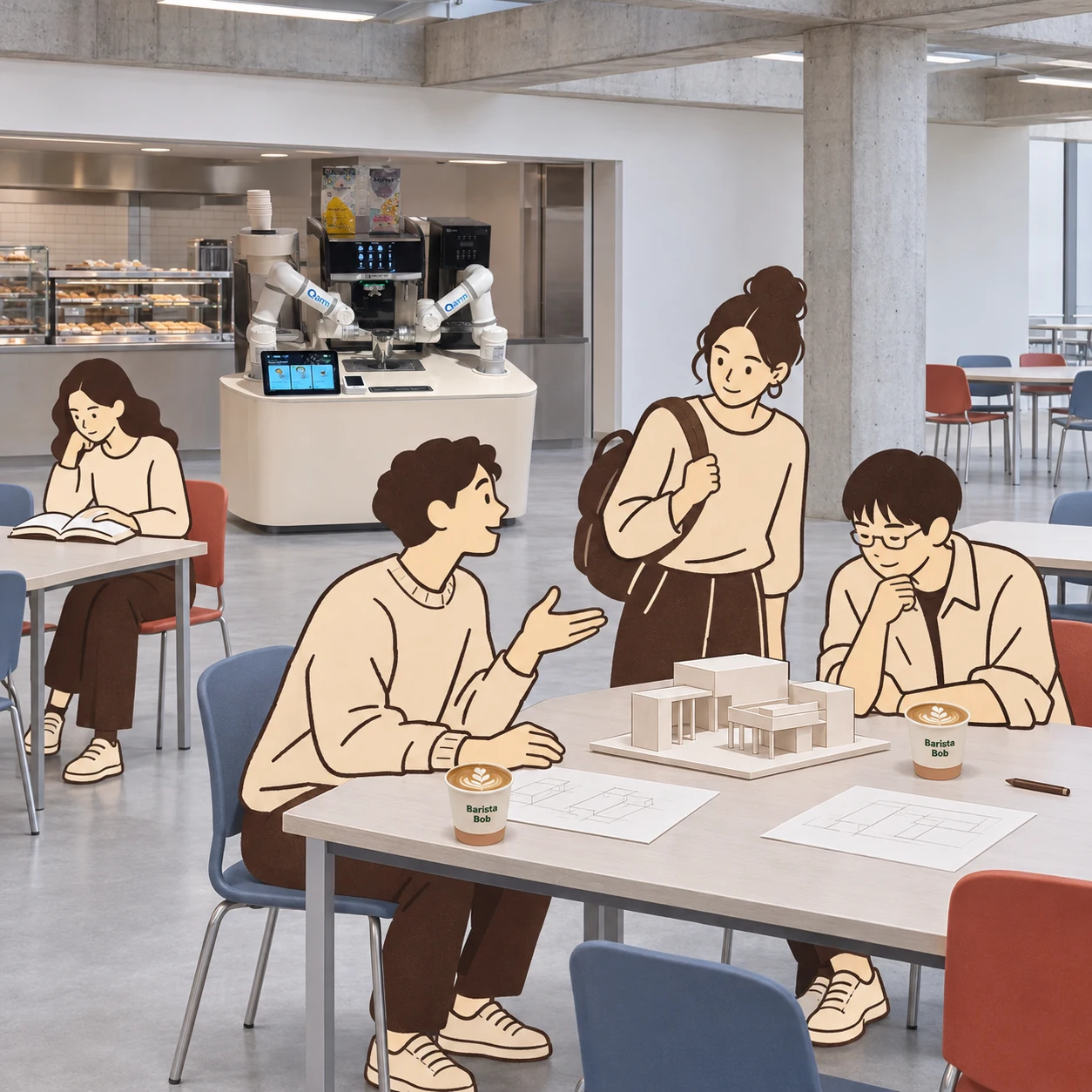
Notice where the day bunches up
A lecture hall releases people in groups; a library produces a steadier trickle, sometimes after the staffed café closes. Mapping these patterns can reveal a better pilot site than the busiest-looking corridor. Observe walks between buildings and check whether queues would affect accessibility.
- Map lecture peaks
- Protect affordability
- Check evening access
Price for a weekly habit
A student buying between classes reads a menu differently from a visitor at an event. Start with a clearly priced everyday drink and one or two alternatives. If a campus subsidy is proposed, agree which drinks, hours or groups it covers and how it is accounted for before presenting it as a benefit.
Pilot a normal teaching week
Compare gaps in availability, queues, prices and upkeep across a standard teaching week, not just orientation day. Ask who will refill and clean the station after the main food service closes. An evening offer is only useful if it can actually remain dependable at that hour.
A library and a foyer have different roles
Compare a library entrance that serves a long study session with a foyer that serves a ten-minute changeover. At the library, test whether pickup is easy to see without creating noise near study desks. In the foyer, prioritise a short route and a clearly visible staple drink. The same pilot criteria need different observations at each site.